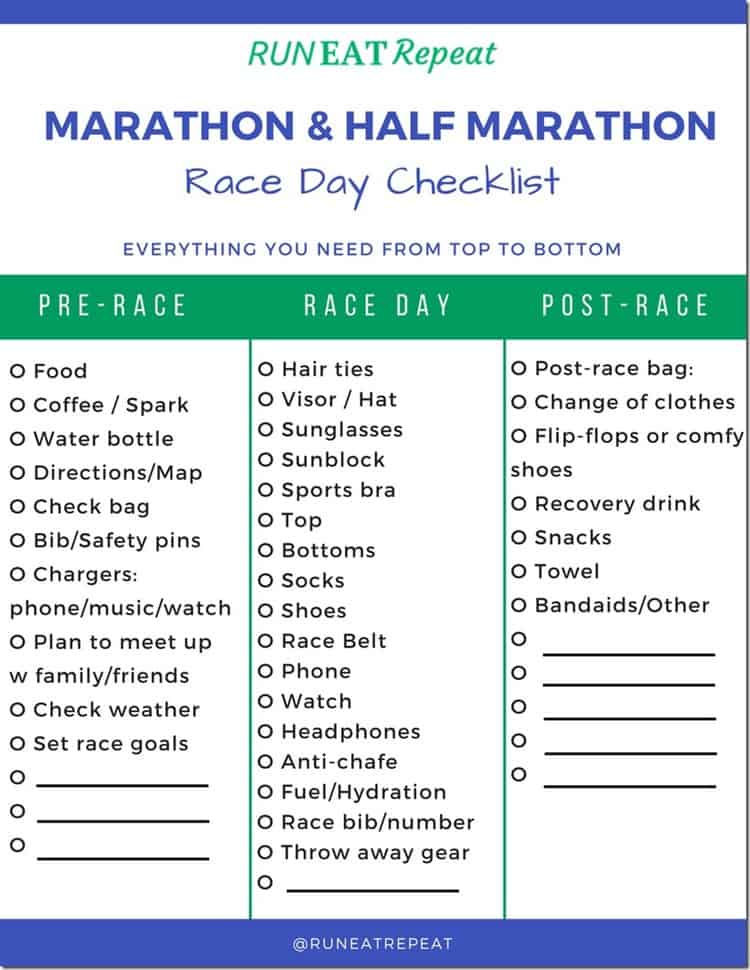
Half Marathon Preparation Checklist
Ensure you have running shoes, proper attire, hydration, and a training plan for a half marathon. Preparing for a half marathon involves more than just running.
From selecting the right gear to following a training schedule, there are various steps you can take to set yourself up for success on race day. In this guide, we will cover everything you need to consider as you prepare for your upcoming half marathon.
Whether you are a seasoned runner or new to the sport, having a comprehensive checklist will help you stay organized and focused on reaching your goals. By following these tips and recommendations, you can ensure that you are fully prepared for the physical and mental challenges of running a half marathon.
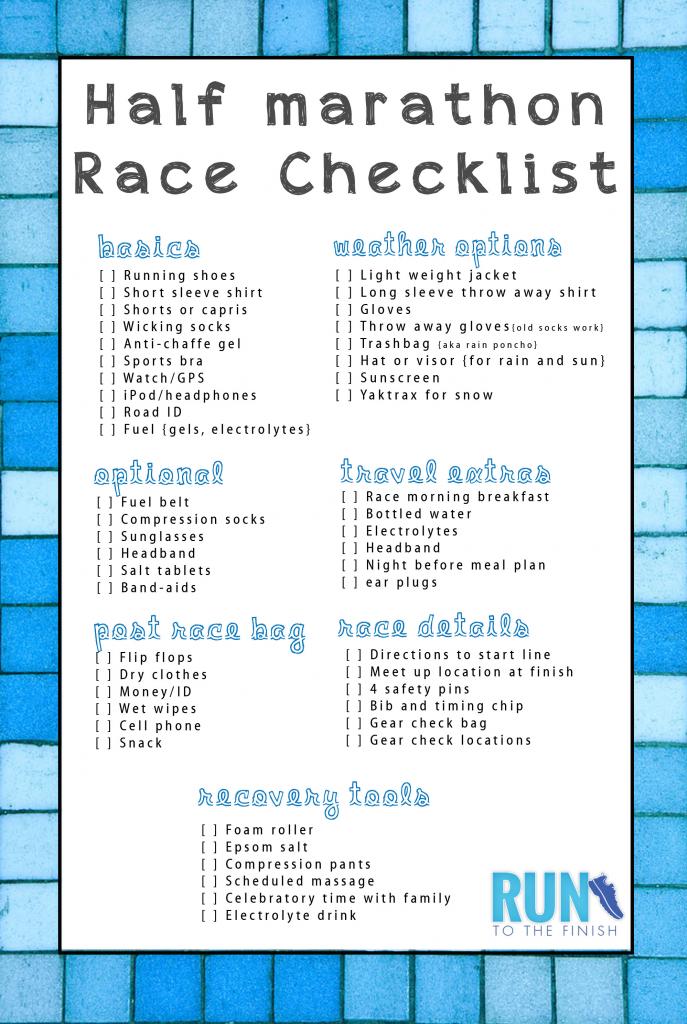
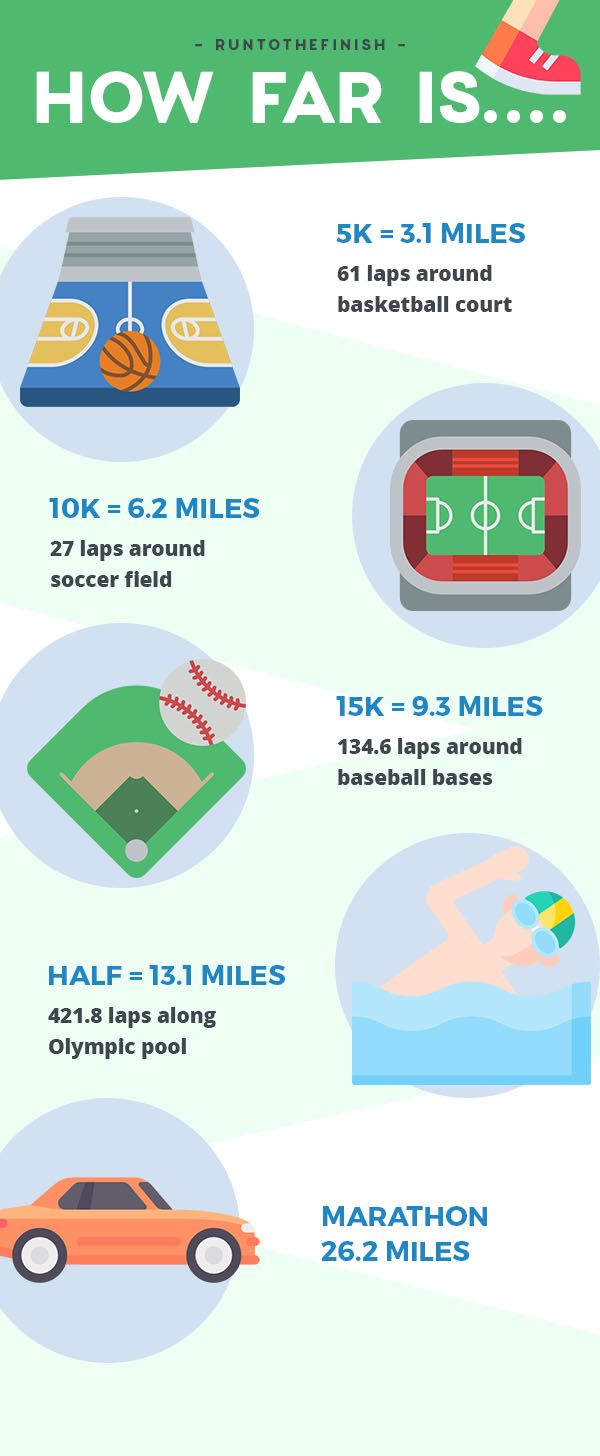
Credit: www.runtothefinish.com
Setting Goals
Setting goals is a crucial step in preparing for a half marathon. Whether it’s your first race or you’re aiming to beat a personal record, having clear objectives will guide your training and keep you focused. This section will help you navigate the goal-setting process and make informed decisions to set yourself up for success.
Choosing The Right Race
Deciding on the perfect race for your half marathon is the first step in setting your goals. Consider factors like location, course profile, and race size. Look for a race that aligns with your preferences and offers the best chance for you to accomplish your goals.
Deciding On A Time Goal
Once you’ve chosen a race, it’s time to determine your time goal. Whether it’s finishing within a specific time frame or achieving a particular pace, setting a time goal will give your training purpose and structure. Be realistic yet ambitious in your goal, considering your current fitness level and previous race performance.

Credit: www.runtothefinish.com
Training Plan
Looking to prepare for a half marathon? Our training plan checklist has got you covered with all the essentials you need to ensure a successful race day. From nutrition tips to cross-training exercises, we’ve got the ultimate guide to help you reach the finish line.
Building Mileage Gradually
Implement incremental mileage increases in your training plan. Utilize a structured approach to prevent overtraining and injuries. Gradually increase both distance and intensity for best results. Focus on consistency in training to build endurance effectively.Incorporating Speed Workouts
Include intervals and tempo runs to enhance speed and stamina. Perform short bursts of high-intensity efforts followed by recovery periods. Speed work improves cardiovascular fitness and running efficiency. Mix up your routine with different types of speed workouts.Including Long Runs
Allocate a day for long runs to improve stamina and mental toughness. Gradually increase the distance each week to simulate race conditions. Long runs help your body adapt to sustained effort and distance. Ensure proper recovery after long runs to avoid burnout.Nutrition And Hydration
Make sure to include proper nutrition and hydration in your half marathon preparation checklist. Focusing on a balanced diet with carbohydrates, proteins, and healthy fats, as well as staying well-hydrated, are key aspects to consider. Consuming a mix of energy gels, electrolyte drinks, and water during the race will help maintain your performance and prevent dehydration.
Eating A Balanced Diet
Eating a balanced diet rich in carbohydrates, protein, and healthy fats is crucial for half marathon preparation.
Include plenty of fruits, vegetables, whole grains, and lean proteins in your meals.
Fueling During Runs
Fuel your body with quick energy sources like energy gels and sports drinks during long runs.
Test different products during training to find what works best for you.
Staying Hydrated
Adequate hydration is vital for performance and recovery.
Drink water throughout the day and during training sessions.
Gear And Equipment
When preparing for a half marathon, having the right gear and equipment is crucial to ensure a successful and comfortable run. From proper running shoes to appropriate clothing and necessary accessories, each element plays a pivotal role in enhancing performance and reducing the risk of injury. Here’s a detailed half marathon preparation checklist for gear and equipment:
Selecting The Right Running Shoes
Investing in a reliable pair of running shoes is essential for runners. Prioritize comfort, fit, and cushioning when selecting the right shoes. Visit a specialized running store to receive a gait analysis – this will help you identify which type of running shoe best suits your foot strike and gait pattern.
Appropriate Clothing
Wearing moisture-wicking clothing can prevent chafing and discomfort during the half marathon. Opt for lightweight, breathable fabrics that provide adequate ventilation. Ensure your clothing is suitable for the weather conditions you will be running in and consider layering options for unpredictable weather.
Accessories And Extras
In addition to your running shoes and clothing, there are various accessories and extras that can enhance your performance and comfort during the race. Consider items such as moisture-wicking socks, a running belt to carry essentials, a supportive sports bra, sunglasses, a hat or visor for sun protection, and a GPS watch to monitor your pace and distance.
Race Day Preparation
Preparing for a half marathon goes beyond just training and endurance. The day of the race requires careful planning and preparation to ensure a successful and enjoyable experience. Here are some essential components to consider when getting ready for the big day.
Getting Enough Rest
Resting properly before a half marathon is crucial for optimal performance and reducing the risk of injury. Sleep should be prioritized in the days leading up to the race. Aim for at least 8 hours of sleep each night and try to establish a consistent sleep routine. By getting enough rest, you’ll wake up feeling refreshed and energized on race day.
Warming Up Properly
Never underestimate the importance of warming up before a race. A proper warm-up routine helps prepare your muscles and joints for the physical demands ahead. To warm up effectively, consider incorporating activities such as light jogging, dynamic stretches, and mobility exercises. By gradually increasing your heart rate and loosening your muscles, you’ll be better prepared for the challenges ahead.
Creating A Race Day Plan
Having a race day plan in place helps you stay focused, organized, and mentally prepared. Start by familiarizing yourself with the race route and aid station locations. Determine your desired pace and set realistic goals based on your training performance. Create a timeline of when you will arrive at the race venue, warm up, and begin your race. Additionally, prepare a checklist of essential items such as your race bib, running gear, hydration, and nutrition. By having a detailed plan, you’ll feel more confident and ready to conquer the half marathon.

Credit: www.pinterest.com
Frequently Asked Questions On Half Marathon Preparation Checklist
What Should I Do Before Running A Half Marathon?
Before running a half marathon, make sure to train properly, stay hydrated, and get enough rest.
How Long Does It Take To Prepare For A Half Marathon?
The duration of half marathon preparation varies depending on your fitness level and goals, typically ranging from 8 to 16 weeks.
How Can I Prevent Injuries During Half Marathon Training?
To prevent injuries during half marathon training, focus on proper warm-ups, strength training, cross-training, and listen to your body’s cues.
Conclusion
To sum up, proper preparation is key to a successful half marathon. By following this checklist, you can ensure that you’re physically and mentally prepared for the challenge ahead. From training and nutrition to rest and gear, every aspect plays a crucial role in your performance.
Good luck and enjoy the experience!